Choosing the right spray foam insulation matters for energy bills, comfort, and durability—especially in Phoenix’s hot, dry climate. This guide breaks down the practical differences between open-cell and closed-cell spray foam so you can choose what’s best for your home. Open-cell foam is flexible and breathable, while closed-cell foam is denser, more rigid, and resists moisture. We’ll cover climate fit, energy performance, costs, installation differences, and the real advantages of each type.
Climate Suitability
Climate plays a major role in choosing insulation. Open-cell foam is more permeable to vapor, which can help interior assemblies dry and reduce the risk of trapped moisture in some situations. Closed-cell foam is a tighter barrier against water and vapor, so it's better where moisture intrusion or flooding is a concern. In Phoenix's heat, both types work well—open-cell helps moderate indoor temperatures through air sealing and breathability, while closed-cell offers stronger protection against radiant heat and moisture where needed.
Energy Efficiency
Energy efficiency often guides the decision. Open-cell foam expands to seal gaps and stops many air leaks, which cuts drafty spots that drive up cooling costs. Closed-cell foam delivers a higher R-value per inch, so it's especially effective when space for insulation is limited. Both can deliver meaningful energy savings; the best choice depends on your space, budget, and performance goals.
Cost Considerations
Budget matters up front, but think long term. Open-cell spray foam is typically less expensive to buy and install. Closed-cell foam costs more up front but can save more over time because of higher insulation value and greater durability. Below is a straightforward cost comparison to help you weigh options:
| Type of Foam | Average Cost per Square Foot | Long-Term Savings Potential |
|---|---|---|
| Open Cell | $0.50 - $0.75 | Moderate |
| Closed Cell | $0.90 - $1.50 | High |
This table shows open-cell is usually cheaper initially, while closed-cell often delivers better lifetime value through higher efficiency and longevity.
Installation Differences
Installation varies by foam type. Open-cell foam is easier to apply, requires less specialized setup, and typically speeds up the job—often lowering labor costs. Closed-cell foam demands precise application and experienced technicians to ensure proper adhesion and performance, so installation costs can be higher but the result is a tougher, longer-lasting envelope.
What Are the Key Differences Between Open Cell and Closed Cell Spray Foam?
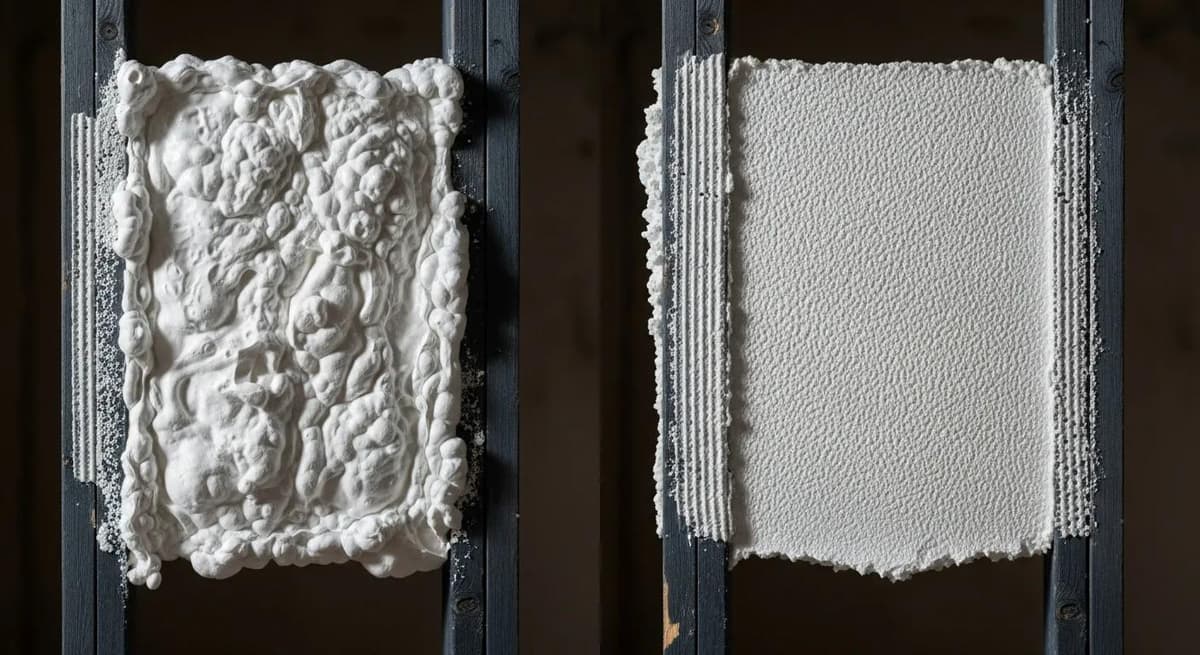
Knowing the core differences helps you match product to purpose. Here are the main distinctions:
- Insulation Properties: Open-cell foam is lighter and has a lower R-value per inch; closed-cell foam is denser and provides a higher R-value per inch.
- Moisture Resistance: Closed-cell foam acts as a moisture and vapor barrier; open-cell foam allows some vapor movement and does not act as a full water barrier.
- Flexibility: Open-cell foam is more flexible and compressible, adapting with building movement; closed-cell foam is rigid and can add structural strength.
Those differences make it important to match the foam to your application and local conditions.
How Do Open Cell and Closed Cell Spray Foam Compare in R-Value and Density?
R-value and density determine how much insulation you get per inch. Closed-cell foam typically offers around R-6 to R-7 per inch, making it a strong choice where space is tight. Open-cell foam generally runs about R-3.5 to R-4 per inch, so you may need greater thickness to reach the same overall R-value. Choose based on the space you have and the insulation target you want to hit.
What Are the Moisture Resistance and Sound Insulation Properties of Each Type?
Moisture and sound control differ by type. Closed-cell foam provides a robust moisture barrier and resists water intrusion, which is why it's often used on exterior walls, foundations, and below-grade areas. Open-cell foam won't stop liquid water but does allow assemblies to breathe and is excellent at absorbing sound—making it a good option for interior walls and ceilings where noise reduction matters.
What Are the Benefits and Ideal Uses of Open Cell Spray Foam in Phoenix Homes?
Open-cell spray foam fits many Phoenix homes when you want good air sealing, noise reduction, and a cost-effective solution for interior cavities. It's well-suited for attics, interior walls, and areas where breathability and flexibility are valuable. Homeowners often see improved comfort and lower cooling costs after proper installation.
How Does Open Cell Spray Foam Improve Energy Efficiency and Indoor Comfort?
Open-cell foam creates a tight air seal that stops drafts and reduces the load on your HVAC system. By limiting uncontrolled airflow and dampening sound, it helps keep indoor temperatures steady and rooms quieter—both of which make a noticeable difference in comfort and monthly energy bills.
What Advantages Does Closed Cell Spray Foam Offer for Arizona Residential Properties?
Closed-cell foam is a strong fit for Arizona homes that need higher performance from a thinner layer of insulation. Its higher R-value per inch, moisture resistance, and added structural stiffness make it ideal for exterior walls, rim joists, and areas exposed to weather. Homeowners benefit from better long-term savings and increased durability.
How Does Closed Cell Foam Provide Superior Insulation and Structural Support?
Closed-cell foam's density and higher R-value reduce heat transfer more effectively, and because it forms a rigid, bonded layer, it can help stiffen framing assemblies. That rigidity, combined with its moisture-blocking properties, protects the structure and improves thermal performance over time.
What Are the Long-Term Energy Savings and Environmental Impacts?

Both open- and closed-cell spray foam can deliver significant long-term energy savings by reducing heating and cooling losses. That translates into lower utility bills and a smaller carbon footprint. Many modern spray foams also use lower-impact blowing agents and recycled content, so choosing the right product and installer can improve both performance and environmental outcomes.
How Can Homeowners Choose the Right Spray Foam Insulation for Their Needs?
To pick the right spray foam, assess your performance goals, available space, and budget. Think about where the foam will be installed and how moisture, sound, and structural needs factor in. Talk with experienced contractors who can inspect your home and offer a recommendation tailored to your situation.
What Factors Should Influence the Decision Between Open Cell and Closed Cell Foam?
Key considerations include:
- Climate: Match the foam to local temperature and moisture patterns.
- Budget: Balance initial cost against potential long-term savings.
- Application: Choose the right foam for interior cavities, exterior walls, or below-grade areas.
Weighing these factors will help you choose the solution that meets your comfort, durability, and budget goals.
How Does Optima SprayFoam Ensure Quality Installation and Customer Satisfaction in Phoenix?
At Optima SprayFoam, we combine experienced crews, proven materials, and a clear installation process to deliver reliable results in Phoenix. Our technicians follow industry best practices, and we prioritize clear communication and customer feedback so each job meets expectations. With a focus on energy efficiency, comfort, and long-term value, Optima SprayFoam is committed to helping homeowners get the right insulation for their homes.